Calming Signals Every Owner Should Know
Dogs have a whole vocabulary for “let's keep the peace.” Once you can read it, you can speak it back.
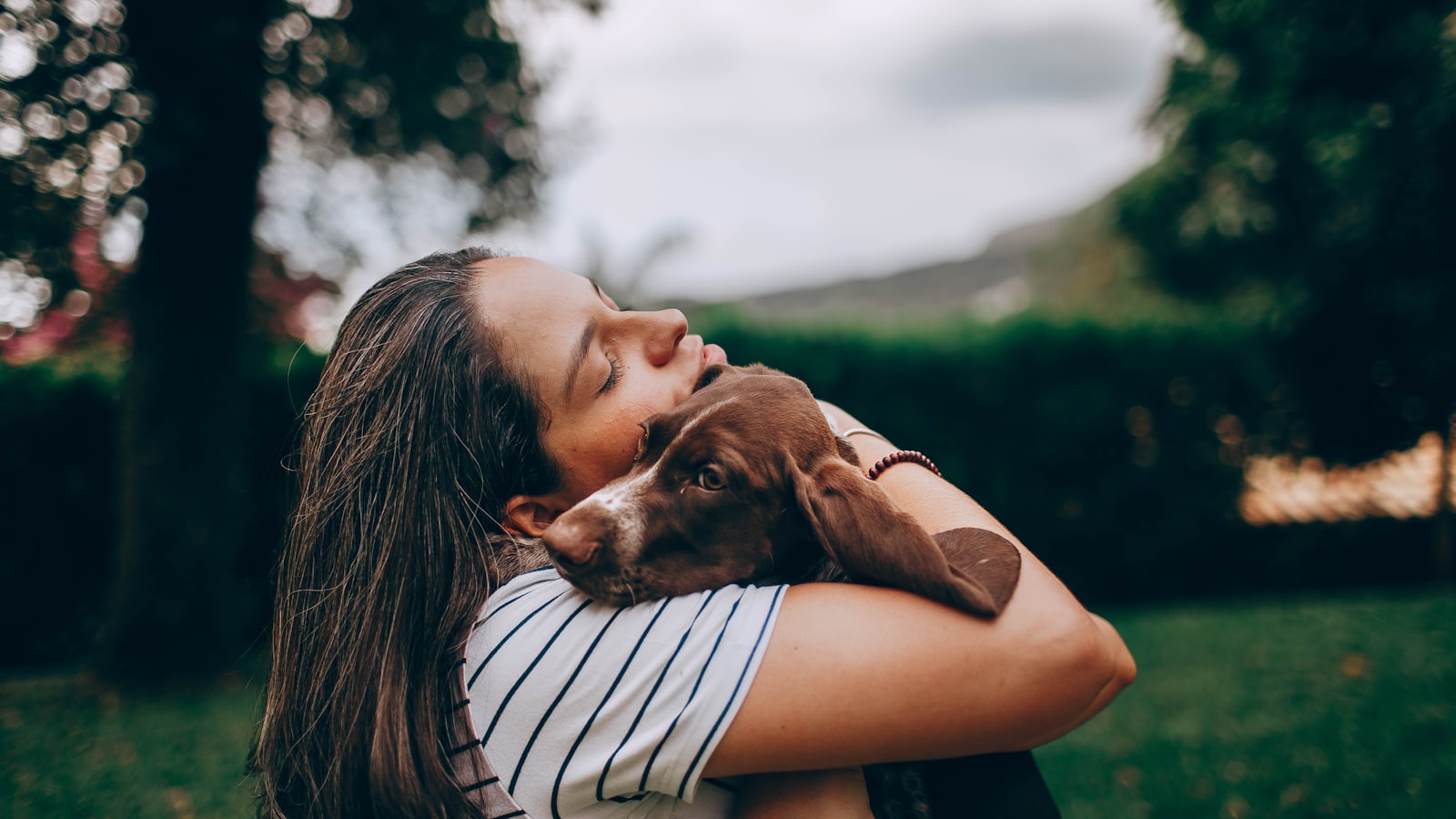
A yawn during a tense moment. A slow lick of the lips. A head turned deliberately away. These look like random quirks, but they're some of the most sophisticated communication your dog has — calming signals, the gestures dogs use to soothe themselves, defuse tension, and tell another dog (or you) “I mean no harm.” Learn to read them and you'll understand your dog on a new level. Learn to offer them back and you become someone your dog finds genuinely reassuring.
Your dog is fluent in a peace-keeping language. Most of us never learn to hear it.
📋 Quick Read
- Calming signals — lip-licks, yawns, looking away, sniffing, slowing down, curving — are how dogs lower tension in themselves and others.
- They're closely related to stress signals: a dog offering them is often saying “this is a bit much, let's dial it down.”
- You can use them too — soft eyes, slow movements, turning slightly sideways — to help a nervous dog feel safe around you.
The signals to know
Calming signals overlap with the stress language, and the common ones are easy to spot once you're looking: a slow lip-lick or tongue-flick, a big yawn when the dog isn't tired, deliberately turning the head or body away, suddenly sniffing the ground, moving in a curve instead of straight at another dog, slowing right down, or a full-body “shake off” as if wet to reset after a tense moment. Individually they're subtle; in context they're a running commentary on how your dog is feeling.
Listen — then answer
When your dog offers calming signals, the kind response is to lower the pressure: add space, slow down, ease off whatever's building. Do that and your dog learns these quiet messages work, so they keep communicating calmly instead of escalating. Even better, you can send calming signals yourself. To help a nervous dog relax around you, avoid looming over them or staring straight into their eyes, approach from the side in a gentle curve, move slowly, and keep your body soft. A slow blink or a yawn of your own can genuinely take the edge off.
Turn reading into trust
The payoff of fluency is trust. A dog whose calming signals are noticed and honored feels understood and safe, and that's the foundation of a relationship where your dog looks to you when they're unsure instead of handling it alone. It's also invaluable around kids and new people — teaching everyone to recognize “I need space” signals and respond kindly prevents the misunderstandings that lead to snaps. Reading calming signals isn't a party trick; it's how you become your dog's safe harbor.
- A slow lip-lick or tongue-flick in a tense moment
- A big yawn when not tired
- Turning the head or whole body away
- Suddenly sniffing the ground for no clear reason
- Moving in a slow curve rather than straight at another dog
- A “shake off” as if wet, to reset after stress
🗓 This Week's Plan
- Days 1–2: Learn the core signals and watch for one — the tense-moment yawn or lip-lick — noting what triggered it.
- Days 3–4: When you see a calming signal, answer it by lowering the pressure (space, slower, softer).
- Days 5–7: Try “speaking dog” with a nervous dog — sideways, soft eyes — and log your dog's Calm Recovery Score in tricky moments.
Learn your dog's language in Pak Social
Log the moments your dog signals for calm and how you answered. You'll build the two-way trust that comes from finally speaking the same language.
Get Pak Social — Free ➡️ Up nextReading Your Dog's Body Language4 min read›