DIY Snuffle Mats and Puzzle Feeders
The best enrichment gear in the pet store is already in your recycling bin. Towels, muffin tins, and cardboard boxes — a full brain-work arsenal for free.
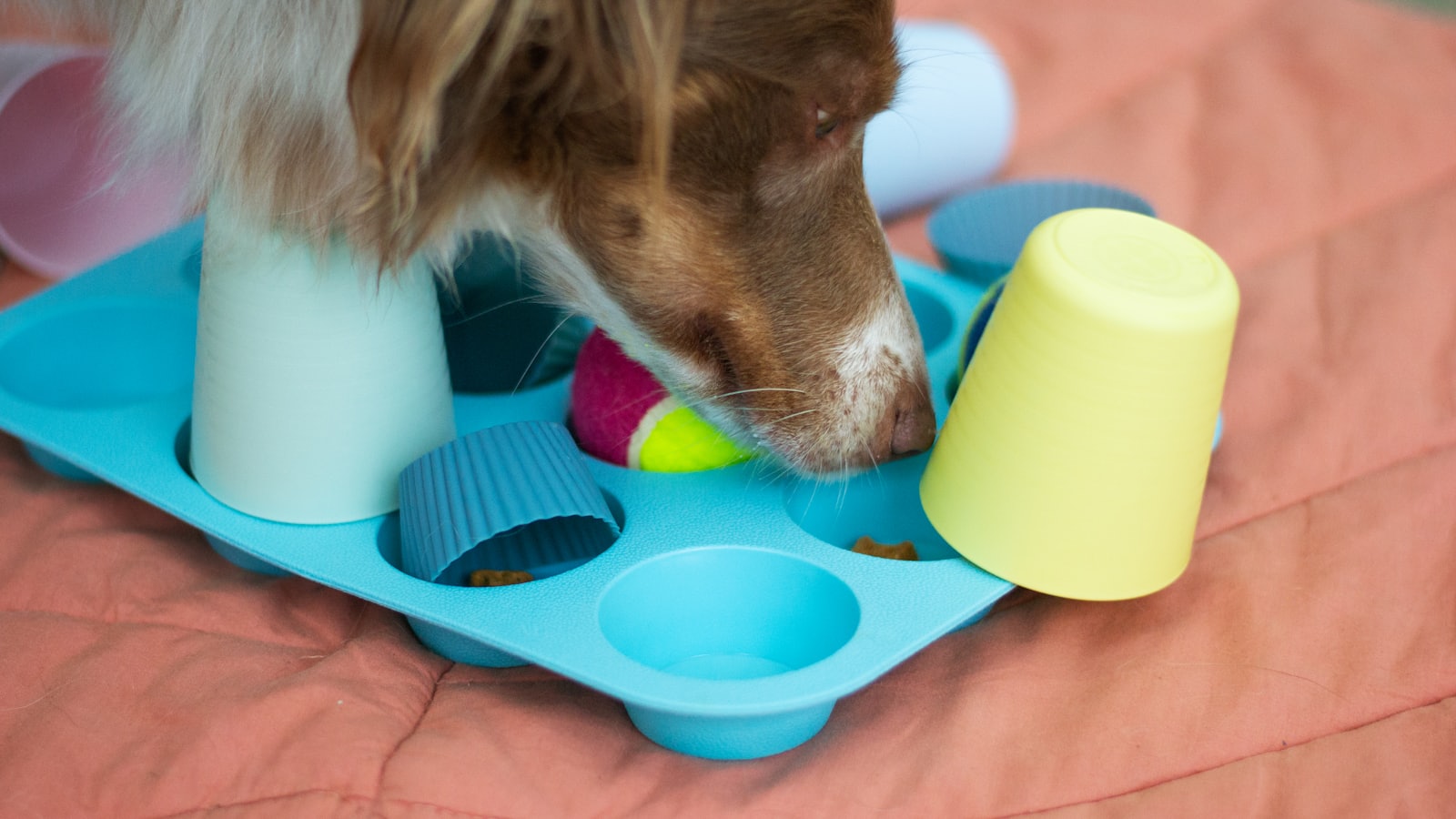
The pet store wants $34 for a snuffle mat. Meanwhile your linen closet contains a towel, your kitchen contains a muffin tin, and your recycling bin is a puzzle-feeder factory that restocks itself weekly. If the scatter-feeding lesson sold you on nose-work as the cheapest calm in dog ownership, this is the sequel: five DIY builds, thirty seconds to five minutes of assembly each, that turn dinner into a rotating puzzle circuit.
Enrichment isn't equipment. It's dinner with a problem attached — and the problems are free.
📋 Quick Read
- The builds, easy to hard: towel-roll burrito → muffin tin with tennis balls → box-in-box forage → braided-fleece snuffle mat → the mixed circuit. Each hides a meal behind a solvable problem.
- Difficulty is a dial, not a goal: a dog who quits means the puzzle's too hard; a dog who finishes in forty seconds means it's too easy. The sweet spot is nose-down persistence.
- Supervise the early sessions and know your dog: shredders and gulpers need sturdier builds (muffin tin, not cardboard) and a watchful eye on what goes in the mouth.
The five builds
One — the towel burrito (10 seconds): sprinkle kibble along a towel, roll it loosely, fold the ends under; unrolling is the puzzle. Two — the muffin-tin cover-up (30 seconds): kibble in each cup, tennis ball on top of each; lift-and-nudge problem solving, and satisfyingly sturdy for rough players. Three — box-in-box (2 minutes): small boxes with a few kibbles each, nested in a bigger box under crumpled paper; a foraging excavation. Four — the braided snuffle mat (30–60 minutes once): fleece strips knotted through a rubber sink mat, dense enough to swallow a scattered meal; machine-washable and identical to the $34 version. Five — the circuit: two or three builds staged in different spots, dinner divided among them — a full foraging patrol.
Read the dial
Watch the first minute: a dog working steadily — nose down, tail loose, methodical — is calibrated right. A dog who sniffs once and walks away found it too hard (loosen the towel roll, remove half the tennis balls, use smellier food); a dog who inhales everything in under a minute needs the next rung (tighter folds, more nesting, the snuffle mat's dense pile). Gulpers and dogs new to puzzles start on easy mode deliberately — early quitting can become a habit of its own. And run puzzles when your dog is pleasantly hungry, not desperate: a frantic dog doesn't problem-solve, they demolish.
Safety and the weekly rotation
Match materials to your dog's mouth: committed shredders skip cardboard and get the muffin tin and mat; anything with staples, tape, or plastic windows gets stripped first; and early sessions are supervised until you know whether your dog solves boxes or eats them. Fleece and towels go in the wash weekly (they're food surfaces now). Then build the rotation: towel burrito Mondays, muffin tin Wednesdays, box dig Fridays, snuffle mat weekends — or whatever pattern fits, as long as no single puzzle runs daily. Rainy days, crate-rest recoveries, and the witching hour are all prime deployment windows; this is the same toolkit the rainy-day enrichment lesson builds on.
🗓 This Week's Plan
- Days 1–2: Build and run the towel burrito at one meal; rate the persistence.
- Days 3–4: Add the muffin-tin cover-up; adjust difficulty to the dial.
- Days 5–7: Run the Recycling-Bin Challenge, set the weekly rotation, and braid the mat if your dog's earned the next rung.
Start the puzzle rotation in Pak Social
One towel, one meal, ten seconds of assembly tonight. By the weekend you'll have a circuit — and a dog who thinks dinner is the best part of the workday.
Get Pak Social — Free ➡️ Up nextEnrichment for High-Energy Dogs4 min read›