How Much to Feed a Growing Puppy
The bag's chart is a guess about an average puppy. Yours isn't average — here's how to feed the actual puppy in front of you, checkpoint by checkpoint.
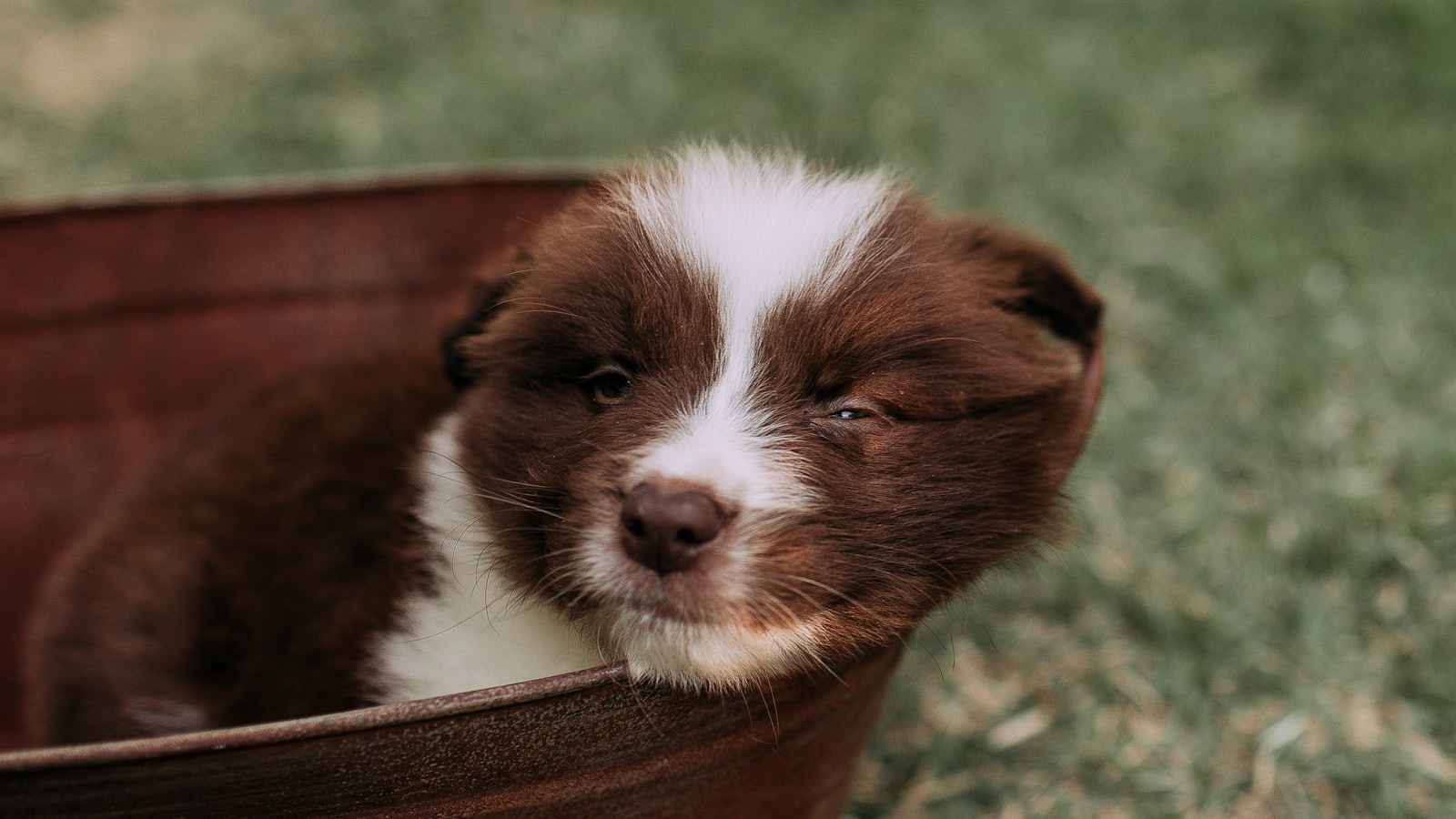
The feeding chart on the bag says two to three cups — a range wide enough to drive a truck through — for a puppy whose 'expected adult weight' you're honestly guessing at. Meanwhile the puppy lobby insists every portion is half what it should be, and grandma insists a chubby puppy is a healthy puppy. Both are wrong, and the chart is only a starting bid. The real system: start at the chart, check the body monthly, and adjust ten percent at a time — because the target moves as fast as the puppy grows.
Feed the puppy in front of you, not the chart on the bag — and let the waistline cast the deciding vote.
📋 Quick Read
- The chart is the opening bid: portion by current age and expected adult weight, split across the day's meals (the count from the feeding-schedule lesson), treats carved out of the total.
- The body condition check is the referee: ribs easily felt, a visible waist, a tummy tuck — checked monthly, because a growing puppy's 'right amount' changes constantly.
- Chubby puppies aren't cute insurance — excess weight during growth stresses developing joints (especially in large breeds), and lean growth is the documented healthier path.
Start at the chart, then make it yours
Find your puppy's current age and expected adult weight on the bag's chart (your vet or the breed's typical range helps with the guess; for mixes, the vet's estimate beats the internet's). Take the middle of the given range, split it across the day's meal count (four, three, or two — the schedule lesson's staircase), and subtract the treat budget before you scoop — training-heavy puppy weeks can route real calories through your pocket, and they count. Measure with an actual measuring cup or a kitchen scale, not the scoop-that-came-with-the-bin (portion creep loves that scoop). That's your baseline. Now the system that matters: hold it for two weeks, then let the body check vote.
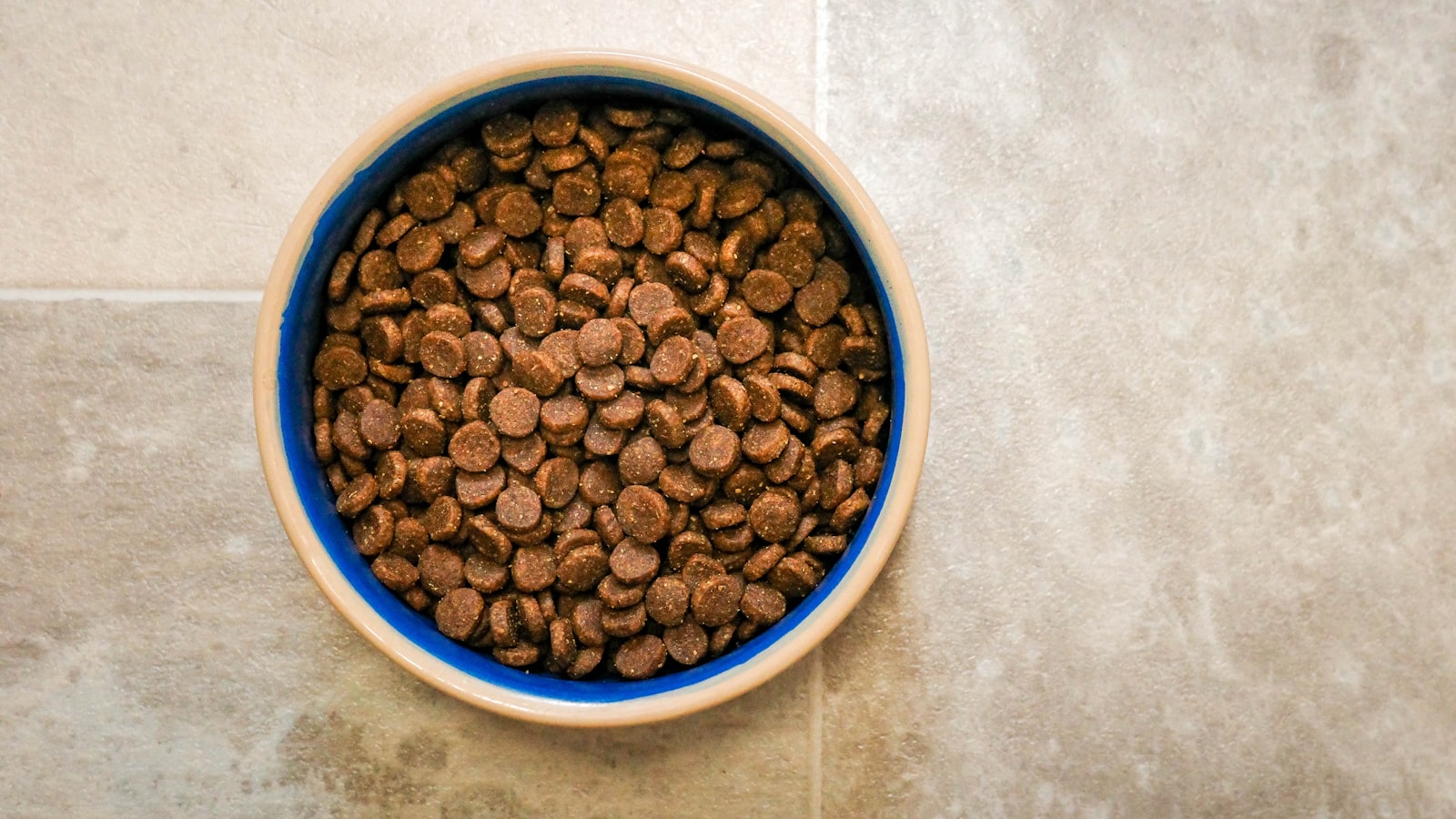
The monthly referee: hands on the puppy
Every month (every two to three weeks during fast growth), run the three-point check from the body-condition lesson, puppy edition: ribs easily felt under a thin cushion — if you're pressing to find them, portions go down; if they're sharply visible on most breeds, portions go up. A waist behind the ribs from above, and a tummy tuck from the side — present even in fluffy puppies when you use your hands. Photograph the check (top view, side view) so next month has a comparison. Puppies should look and feel athletic-lean, not round: the pudgy-puppy aesthetic is exactly the growth pattern that loads developing hips and elbows, and in large breeds it's a genuine orthopedic gamble. Your vet will body-score at every puppy visit anyway — ask them to calibrate your hands once, and the monthly check becomes trivially easy.
Growth spurts, plateaus, and the finish line
Expect the pattern to wobble: a spurt week where yesterday's portion genuinely isn't enough (the check and the ribs will say so), plateau weeks where appetite dips and the half-finished bowl is fine, and a gradual glide-down in intensity as growth slows — many owners are still feeding peak-growth portions months after growth peaked, which is where the pudge sneaks in. Keep the puppy formula until actually grown (the schedule lesson's timeline: small breeds around a year, large breeds up to eighteen-plus months on large-breed formula — vet-confirmed), and treat the switch to adult food as a fresh portion-setting exercise, because adult formulas carry different calories per cup. Through all of it, the loop never changes: chart to start, hands monthly, ten percent at a time. Feed the puppy in front of you, and the puppy in front of you turns into a lean, sound adult.
🗓 This Week's Plan
- Days 1–2: Set the chart-based baseline — measured portions, meal count, treats carved out.
- Days 3–4: First hands-on body check with photos; ask the vet to calibrate your read at the next visit.
- Days 5–7: Run the treat audit, set the monthly check reminder, and hold the portion steady until the referee votes.
Start the feeding loop in Pak Social
Chart to start, hands monthly, ten percent at a time. The bag fed an average puppy — you're about to feed yours.
Get Pak Social — Free ➡️ Up nextPuppy vs. Adult vs. Senior Formulas6 min read›