Leash Reactivity: A Practical Plan
The barking, lunging, Jekyll-and-Hyde walks — leash reactivity is common, misunderstood, and workable. The practical plan: manage the rehearsals, work under threshold, change the emotion.
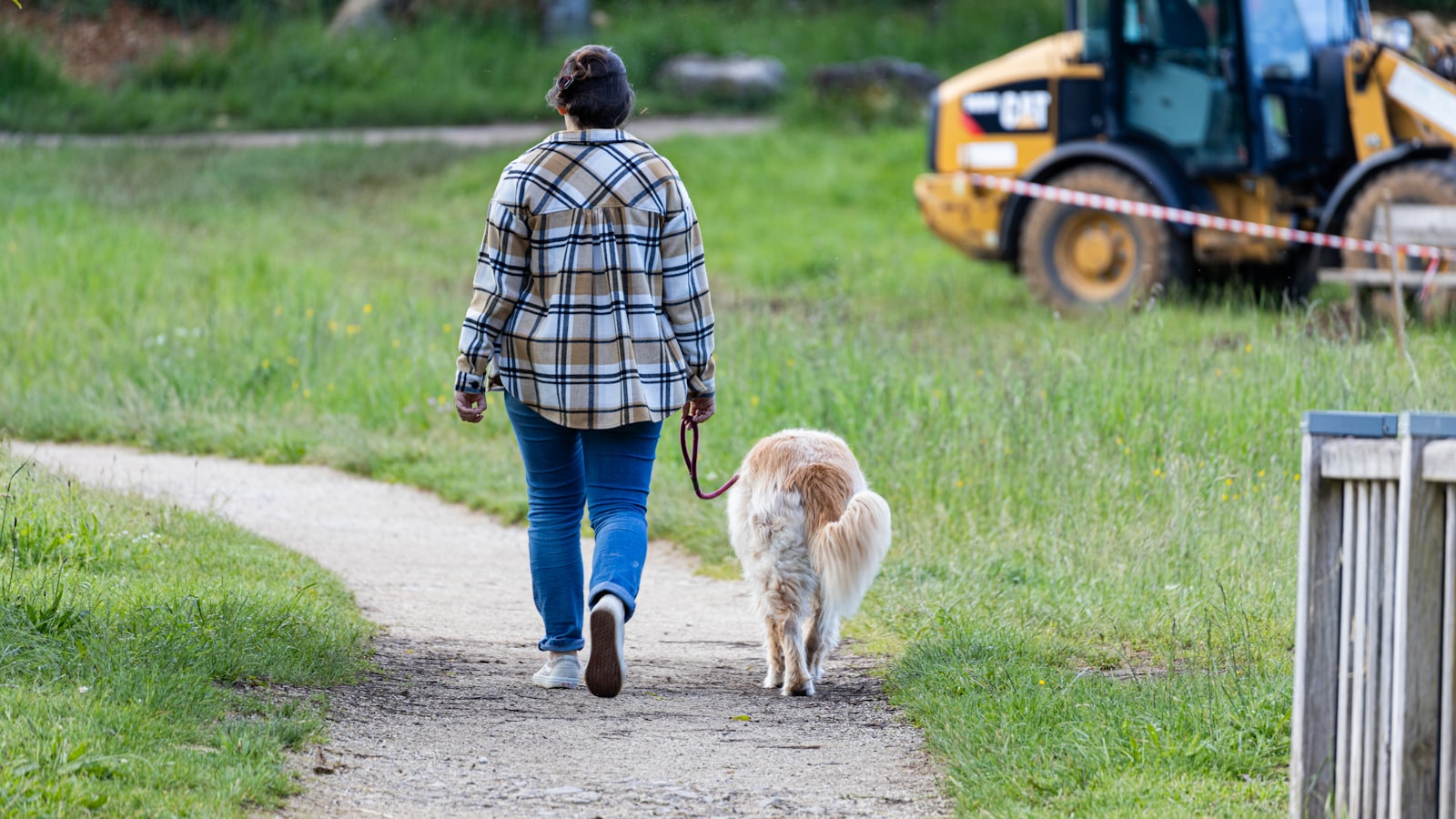
Off leash at daycare, your dog is a social butterfly. On leash, the sight of another dog at forty yards turns them into a barking, lunging stranger — and you into the person apologizing across the street. Leash reactivity is one of dog ownership's most demoralizing problems and one of its most misread: it's almost never 'aggression' — it's emotion (fear or frustration) trapped on a six-foot line — and the plan that works is the same at both roots: stop the rehearsals, work below the explosion, and rewrite what triggers predict.
A reactive dog isn't giving you a hard time — they're having a hard time, at the end of a leash that deleted all their other options.
📋 Quick Read
- The leash is the mechanism: it removes flight and throttles greeting, leaving big feelings only one outlet — the display. Fear-reactives want distance; frustration-reactives want contact; both explode identically.
- The plan's three legs: management (route, distance, and the let's-go pivot — every rehearsal deepens the wiring), under-threshold counterconditioning (trigger appears → chicken rains → trigger leaves), and handler mechanics (loose leash, calm exits, no corrections).
- The professional line is real: reactivity with bite history, escalation despite honest work, or owner fear means a credentialed positive-reinforcement trainer or veterinary behaviorist — this plan is the foundation either way.
Manage first: every un-fired explosion is training
Before any counterconditioning, cut the rehearsal rate: walk off-peak and off-Broadway (the empty industrial street beats the dog-parade park for now — this is treatment-phase routing, not forever), use geography (parked cars, hedges, driveways as sightline breaks and escape pods), deploy the let's-go pivot at FIRST sight (the direction-change lesson built exactly this tool — cheerful, early, before the load-up), and know your dog's load-up sequence cold (the ears, the freeze, the coiled half-step — the strong-dog lesson's one-second warning, which is where every good decision lives). Gear supports it: front-clip harness or conditioned head halter (control without throat pressure), the treat pouch loaded with meaningful currency, and for dogs with any bite history, the happy-muzzle skills from that lesson — safety that lets training proceed.

The counterconditioning engine
Find the working distance: the range where your dog SEES the trigger and can still think — ears register, body stays loose enough to eat (the treat test is the gauge, verbatim from the socialization lessons). Then run the engine: trigger appears → the chicken party starts (rapid-fire, tiny, extraordinary treats) → trigger leaves or you pivot away → party ends. The trigger's appearance becomes the cue for wonderful things — hundreds of reps, at distances that shrink only as the emotion changes (the dog who sees a dog and whips to YOU for the party has rewritten the prediction; that whip is the whole protocol working). Engineer the reps where you can: the parked-car observation post near the park entrance, the ridge above the trail, the parallel-walk setups with a steady dog at generous distance (the next lesson in this chain). And forgive the bad days: trigger-stacking is real (two close calls plus a garbage truck equals a shorter fuse), and a blown session costs a day, not the project.
The long game and the professional line
Run the plan in months, not weeks: management holding the rehearsal rate near zero, three or four deliberate counterconditioning exposures a week, the log tracking threshold distance and clean-pass streaks, and life upgrades doing quiet work underneath (the enrichment channels lower baseline arousal; decompression sniff-walks in trigger-free zones keep the walk itself loved). Escalate honestly: a credentialed positive-reinforcement trainer accelerates everything (setups are their craft — one good setup beats ten street lotteries); a veterinary behaviorist enters for bite histories, multi-trigger generalization, or reactivity that survives months of honest work (medication support opens learning windows for exactly these dogs — the noise-phobia lesson's same truth); and owner fear is itself the signal (a handler bracing at every corner is feeding the loop — help serves both ends of the leash). The realistic destination: not a dog-park butterfly, but a dog who notices triggers, checks in with you, and walks on — which, ask any graduated reactive-dog owner, feels like a miracle that data built.
🗓 This Week's Plan
- Days 1–2: Reroute to off-peak, off-Broadway walks; load the pouch with real currency; rehearse the let's-go pivot.
- Days 3–5: Run the Threshold Map observation sessions; log the working distance.
- Days 6–7: First deliberate counterconditioning reps at that distance — trigger, party, pivot, done. Log everything.
Start the Threshold Map in Pak Social
One quiet route, one loaded pouch, one honest distance measurement. Your dog was never giving you a hard time — and now you both have the plan.
Get Pak Social — Free