Shaping New Behaviors
The most powerful training method most owners never learn: reward the tiny approximations, and let your dog invent their way to behaviors no lure could ever guide.
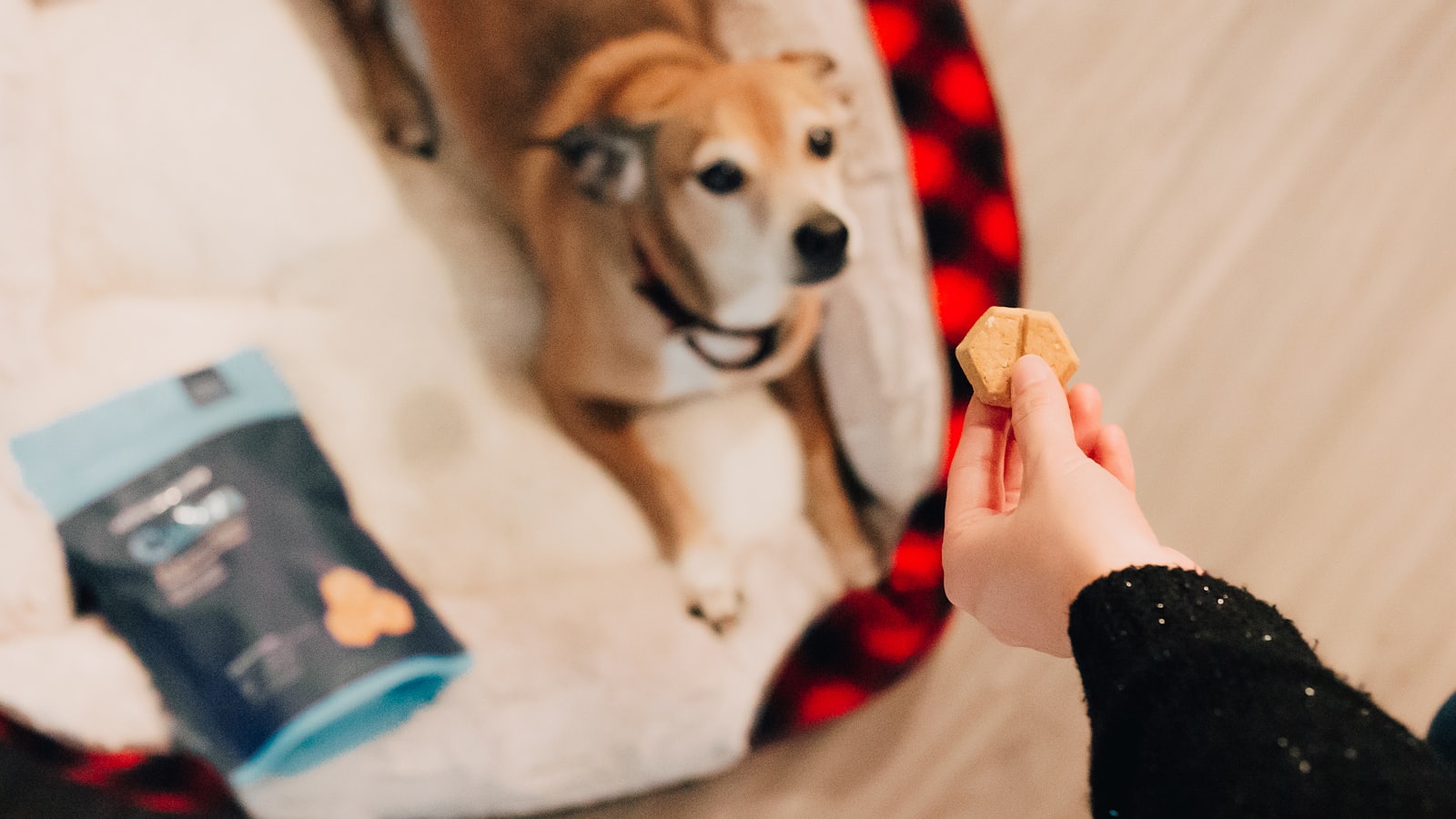
Luring hits a ceiling. You can guide a dog into a sit with a treat at the nose, but how do you lure 'go pick up your toys,' 'ring the bell to go out,' or 'rest your chin here and hold still for the ear drops'? You don't — you shape them: reward the first tiny step toward the goal, then the next, then the next, until the dog assembles the whole behavior themselves. Shaping is the closest thing training has to magic, and the reason it feels like magic is that the dog is doing the thinking.
Luring puts the behavior in your dog. Shaping lets your dog find it — and a dog who found it never forgets it.
📋 Quick Read
- Shaping = rewarding successive approximations: you mark and pay behaviors that are a little closer to the goal each time, building complex actions from tiny buildable steps.
- It unlocks the un-lurable: bell-ringing, tidy-up, cooperative-care positions, distance behaviors, and anything a dog resists being physically guided into — plus it's ideal for fearful dogs who dislike hands-on methods.
- The dog becomes an active problem-solver: because they're offering behaviors to see what pays, shaping builds confidence, engagement, and 'learning to learn' — skills that make every future behavior faster to teach.
The mechanics: mark the approximations
Pick a goal and a first approximation so easy the dog can't fail. Teaching 'go to a mat'? The first click is for a glance toward the mat, or a single step. Mark that instant (clicker or a crisp 'yes'), pay, and reset. Then raise the bar by a hair: now you wait for two steps before marking. Then a paw on the mat, then two paws, then all four, then lying down on it. Each criterion is held until fluent, then nudged closer to the goal. The dog, meanwhile, is actively experimenting — 'what got the click? let me try that again, and more of it' — which is exactly the engaged problem-solving that makes shaped behaviors so durable. Keep sessions short and the rate of reinforcement high; a dog who's clicking frequently stays in the game.
Splitting, lumping, and reading the dog
The master skill of shaping is 'splitting' — breaking the behavior into steps small enough that the dog keeps succeeding — versus 'lumping,' asking for too much at once and stalling out. When a dog stops offering, you almost always lumped: drop back to the last approximation they nailed and split the next step finer. Manage the reinforcement so the dog stays confident: if you raise the bar and they fail twice, the bar was too high. Watch for the 'aha' — the moment the dog suddenly repeats the target deliberately, offering it with intent; that's when you know the concept landed and you can start adding the cue (name the behavior only once it's happening reliably, exactly like every other lesson). And embrace the offered garbage early on: a dog throwing random behaviors to see what pays is a dog fully in the game — you just click the ones heading toward your goal and ignore the rest.
What shaping unlocks
Once you can shape, the training ceiling lifts. Complex chains: tidy-up (shaped from 'touch the toy' to 'pick up' to 'carry to box' to 'drop in' — the carry and drop-it lessons, assembled), bell-ringing to go out, fetching named objects, closing doors. Cooperative care: chin rests, paw presentations, standing still for exams — the handling and vet-anxiety lessons' consent behaviors are pure shaping, and they're un-lurable by nature. Distance and duration behaviors, tricks for the AKC trick titles, and service-style tasks all run on shaping. And the meta-benefit compounds: every behavior you shape makes your dog a better learner — more willing to experiment, more persistent, more 'switched on' in training — so the tenth shaped behavior comes faster than the first. Shaping isn't just a technique; it's how you build a thinking training partner.
🗓 This Week's Plan
- Days 1–2: Load your marker (clicker or 'yes'), pick one un-lurable goal, and identify the easiest first approximation.
- Days 3–5: Shape in five-minute sessions — mark approximations, raise the bar in slivers, back up when the dog stalls.
- Days 6–7: Push toward the goal and add the cue once it's reliable; run the Shape-Something Week finale.
Start a shaping project in Pak Social
Pick one behavior no lure could reach, load your marker, and click the first tiny step tonight. The magic is real — and it's your dog doing the thinking.
Get Pak Social — Free ➡️ Up nextTroubleshooting When Training Stalls3 min read›