Teaching Sit: Your Dog's First Victory
It's the simplest cue in the book — which is exactly why it's the perfect place to teach your dog how learning works.
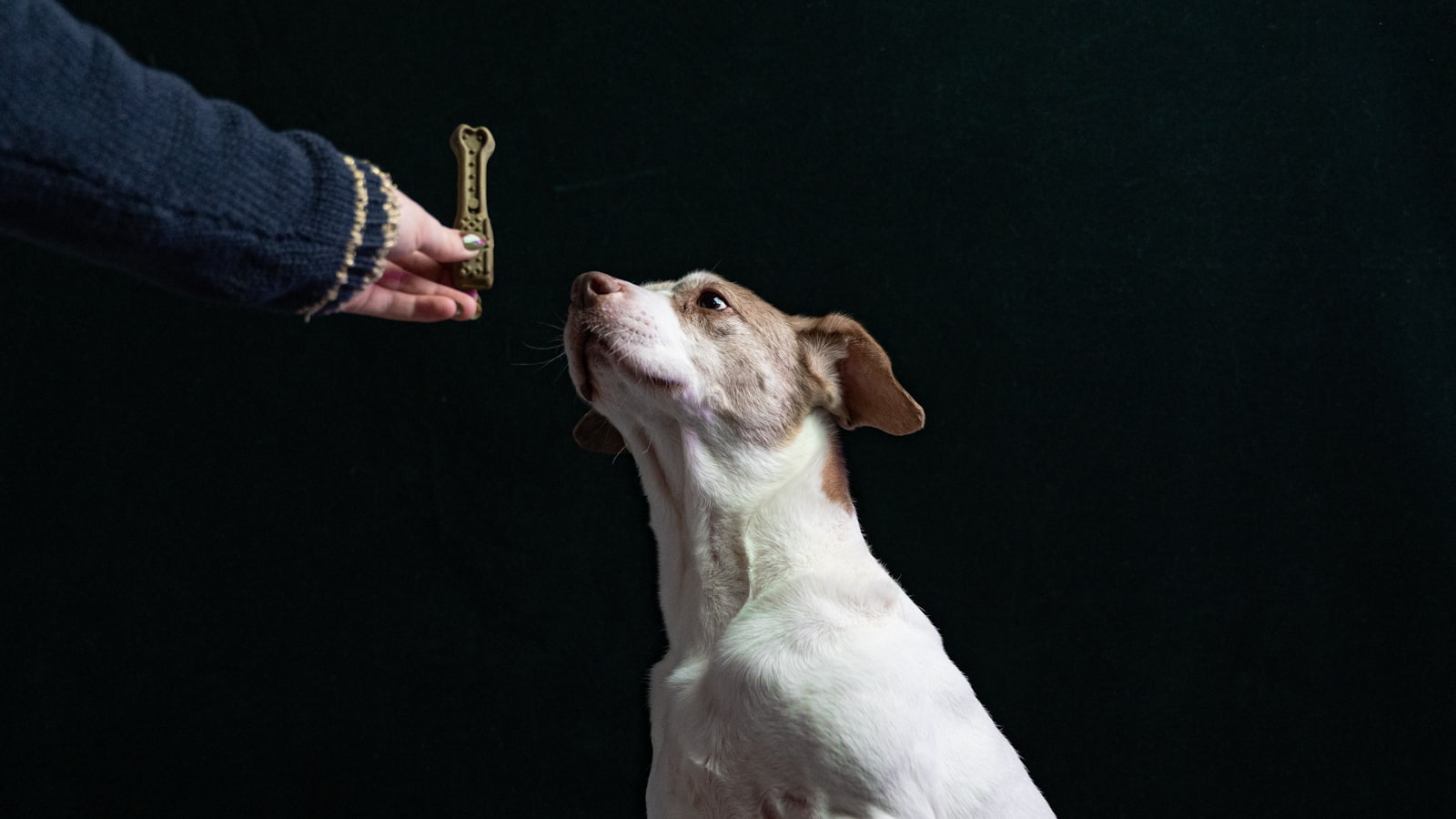
You're trying to clip the leash on and your dog is a furry pinball — bouncing, spinning, all four paws airborne with excitement. Now picture the same doorway with a dog parked in a sit, tail sweeping the floor, waiting for the click of the clasp. That's what "sit" really buys you: not a party trick, but a reset button for excitement — and your dog's first-ever proof that making a good choice makes good things happen.
Sit is your dog's first paycheck: good choices earn good things.
📋 Quick Read
- Sit is the ideal first cue because it's a natural position dogs offer anyway — success comes fast, and fast success teaches the bigger lesson: training is a game you can win.
- The lure method does the work: treat to the nose, slowly up and back over the head, and the rear folds to the floor by pure geometry. No pushing — ever.
- A sit your dog can't do at the door or the park isn't finished: dogs don't generalize, so the cue must be re-earned in each new context.
The lure: five reps to the first sit
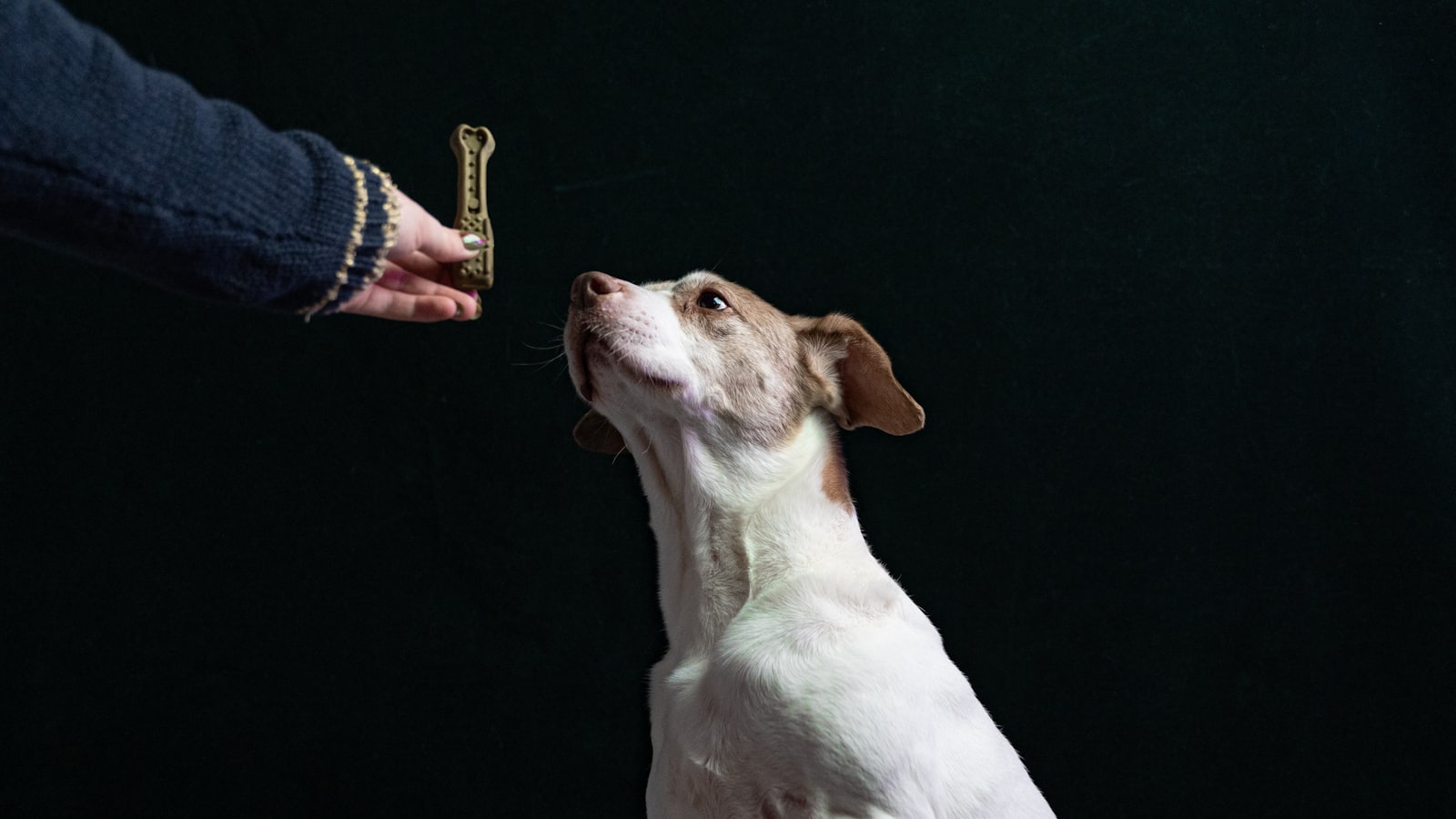
Quiet room, hungry-ish dog, a treat between your fingers. Let them sniff it, then draw it slowly up and back, just over the head — as the nose follows, the rear folds. The instant the hips touch floor: mark ("yes!") and pay. If the dog backs up instead, work with a wall behind them; if they jump for the treat, you're holding it too high. Five clean reps, end the session. No word yet — the position has to be fluent before the label goes on. And never push the rear down: a dog placed into a sit learns nothing but hands-mean-pressure.
Fade the lure, add the word
After a few sessions, run the same hand motion with no treat in it — pay from the other hand when the sit lands. The gesture has just become your hand signal. When the signal works reliably, say "sit" once, then give the signal, and let the word soak in over a dozen reps; soon the word alone beats the hand to it. Two discipline points: say it once (a "sit-sit-SIT" habit teaches the cue is three words long), and keep paying well during this phase — the payroll gets randomized later, after the skill is bulletproof.
Take it on tour
A kitchen sit is not a doorway sit is not a park sit — to your dog these are different puzzles, and each new context needs the cue rebuilt (faster each time) with fresh generosity. Tour deliberately: hallway, front porch, sidewalk, a friend's house, outside the café. Then weave it into life until it's ambient: sit for the leash, sit before the bowl lands, sit at curbs, sit for greetings. That's how a trick becomes a manner — the sit stops being something you request and becomes how your dog asks for things.
🗓 This Week's Plan
- Days 1–2: Lure sessions — five clean folds, twice a day, quiet room. No verbal cue yet.
- Days 3–4: Fade to the empty-hand signal, then attach the word. Say it once, ever.
- Days 5–7: Tour two new locations and start real-life sits (leash, bowl, curb). Finish with the Doorway Gauntlet.
Start the Teaching Sit plan in Pak Social
One treat, one slow lure, tonight. Five minutes a day and by next week the pinball at the door is a dog who sits to make the walk happen.
Get Pak Social — Free ➡️ Up nextTeaching Down: Your Dog's Chill-Out Button4 min read›